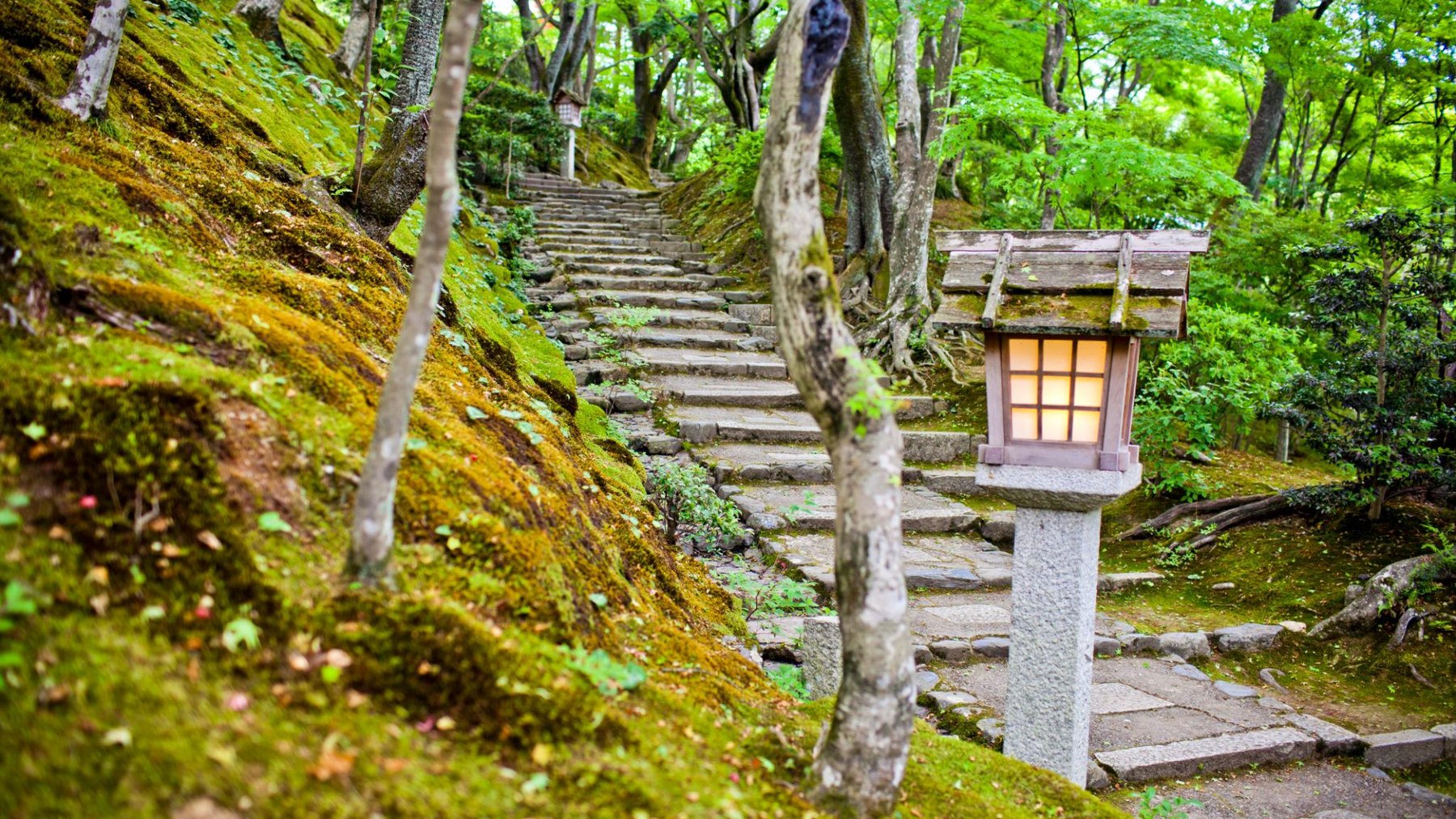
Kyoto has over 1,600 Buddhist temples, 400 Shinto shrines, and seventeen UNESCO World Heritage Sites concentrated in a city smaller than Los Angeles. The difficulty is not finding somewhere worth visiting — it is choosing between them, understanding what makes each one distinct, and arriving at the right time of day before the tour groups fill the gravel paths. This list is built around eight sites that reward genuine attention, spread across the city’s different districts and different traditions, followed by the Philosopher’s Walk that connects the best of the eastern district on foot. None of them require prior knowledge of Buddhism or Shinto to appreciate. All of them will stay with you.
Most visitors to Kyoto spend their time in the eastern Higashiyama district and miss the northwestern temples entirely. Daitoku-ji is the best reason to correct this. A vast Rinzai Zen temple complex founded in 1319, it contains twenty-four sub-temples within its walls, each with its own garden, and several of the finest karesansui (dry rock gardens) in Japan. Unlike Ryoan-ji, which is famous and perpetually crowded, Daitoku-ji's sub-temples — particularly Daisen-in and Zuiho-in — receive a fraction of the visitors and allow the kind of quiet contemplation that the gardens were designed for.
Don't miss: Daisen-in's miniature rock garden, designed in 1513, which uses stones, sand, and a single tree to represent a landscape — mountains, rivers, ocean — in a space barely larger than a room. Zuiho-in, built by a Christian daimyo, whose garden contains a cross shape hidden in the stone arrangements for those who look carefully. Go on a weekday morning and you may have entire sub-temples to yourself.
Japan Travel Guides on Amazon →Forty minutes by train from central Kyoto, Kurama-dera sits at the top of Mount Kurama in a forest so dense and old that the air is genuinely different from the city below. The temple itself — founded in 770 AD — is less interesting than the journey to it: a steep mountain path through cedar and cypress trees, past smaller shrines and stone lanterns, the city disappearing below you as the forest takes over. The mountain is considered in Japanese tradition to be sacred, the home of Mao-son, a deity of the earth, and whatever you make of that, the experience of climbing through the forest to the summit is the closest thing to a genuinely spiritual encounter available to a non-Japanese visitor without any prior practice or belief.
Don't miss: The full walk from Kurama station up to the summit and down the other side to Kibune — a two to three hour walk through mountain forest that ends at the Kibune shrine and the famous kawadoko restaurants, where in summer tables are built directly over the river and you eat sitting above running water. Take the train back from Kibune to Kyoto.
Japan Travel Guides on Amazon →The most famous rock garden in the world: fifteen stones arranged in raked white gravel in a space roughly the size of a tennis court, enclosed by an oil-soaked clay wall that has aged to a colour somewhere between amber and rust. No one knows definitively who designed it or what it represents — dates range from the late fifteenth to the early sixteenth century, and interpretations from islands in the sea to a tiger crossing a river to nothing at all — and that uncertainty is part of what makes it inexhaustible. There is no correct answer. You sit on the wooden veranda, look at the stones, and think whatever you think. The crowd problem is real: go before 8:30am or after 4pm.
Don't miss: The tsukubai — a small stone water basin near the garden inscribed with the phrase "I learn only to be contented," readable only when reflected in the water at its centre. The pond garden surrounding the main buildings, largely ignored by visitors rushing to the rock garden, which is beautiful in its own right and almost always peaceful. The tofu restaurant near the exit, which has been serving kaiseki tofu meals since the Edo period.
Japan Travel Guides on Amazon →Ten thousand vermilion torii gates climbing the forested slopes of Mount Inari for four kilometres, dedicated to Inari, the Shinto deity of foxes, rice, fertility, industry, and worldly success. The photographs you have seen of this place do not lie, but they do not capture the scale of the thing or the way the light filters through the gates when the mountain is quiet. At mid-morning in peak season it is one of the most crowded places in Japan. At dawn or dusk, when the lower gates are still lit by lanterns and the tour groups have not yet arrived or have already left, it belongs to you and the fox messengers that inhabit the mountain. The full circuit to the summit and back takes about two hours.
Don't miss: The upper mountain beyond the first major intersection, where perhaps ten percent of visitors continue. The crowds thin dramatically after the Yotsutsuji intersection, the path becomes a forest walk, and the small sub-shrines become increasingly atmospheric. The summit offers a view over the city that most visitors never see. Bring water — the path is steep in places.
Japan Travel Guides on Amazon →A three-storey Zen temple covered in gold leaf, reflected in a mirror pond, surrounded by a classical garden — the most photographed site in Japan and justifiably so. The crowds are unavoidable and the experience is, by any honest account, somewhat like visiting a very beautiful theme park. Go anyway. The building, originally built as a retirement villa for the shogun Ashikaga Yoshimitsu in 1397 and converted to a temple after his death, was burned to the ground by a monk in 1950 and rebuilt in 1955 — an act of destruction that Yukio Mishima turned into one of the great Japanese novels of the century. Knowing the story of the burning changes what you see.
Don't miss: The view from the Anmintaku pond at the far end of the garden, where the pavilion is framed differently and the crowds thin briefly. The tea ceremony available near the exit — straightforward and tourist-facing but a genuine introduction to the practice. And Mishima's novel The Temple of the Golden Pavilion, which is best read either before or after the visit rather than during.
The Temple of the Golden Pavilion on Amazon →Built as a counterpart to the Golden Pavilion and never actually covered in silver — the shogun who commissioned it ran out of money before the coating could be applied — Ginkaku-ji is in some ways the more interesting of the two. The garden surrounding it is one of the finest examples of the Higashiyama period aesthetic: a cone of white sand called the Moon Viewing Platform, a sea of raked sand called the Silver Sand Sea, and a moss garden of extraordinary refinement climbing the wooded hillside behind the main buildings. Less famous than Kinkaku-ji, easier to reach on foot from the city, and the natural starting or ending point for the Philosopher's Walk.
Don't miss: The upper garden path through the moss and trees behind the main buildings — most visitors stay at the lower level and miss the view back over the sand garden and the pavilion from above. The Togu-do, a small hall containing the first four-and-a-half-mat tea room ever built, considered the origin of the Japanese tea ceremony aesthetic. Arrive before 9am to have the garden largely to yourself.
Japan Travel Guides on Amazon →One of the most important Zen temple complexes in Japan, and one of the least visited given its quality. The San-mon — a vast wooden gate built in 1628, three storeys high — is one of the finest pieces of architecture in Kyoto, and the view from its upper level over the temple rooftops and the Higashiyama mountains is extraordinary. Within the complex, Nanzen-in's garden surrounds a pond that has been here since the thirteenth century, and a Victorian-era brick aqueduct runs incongruously through the temple grounds — a remnant of the 1890 Lake Biwa Canal project that somehow manages to feel at home in its surroundings.
Don't miss: The sub-temple of Tenju-an, whose garden is considered one of the finest in Kyoto and receives a small fraction of the visitors that the main complex attracts. The aqueduct at Suirokaku — the brick arches carrying water from Lake Biwa through the temple grounds are genuinely surreal in context and worth the brief detour. The walk from Nanzen-ji north along the canal path to Ginkaku-ji, which takes about twenty minutes and is the southern end of the Philosopher's Walk.
Japan Travel Guides on Amazon →The bamboo grove at Arashiyama is one of those places where the photographs and the reality align — the stalks are genuinely enormous, the light genuinely extraordinary, the sound of wind through bamboo genuinely unlike anything else. The crowds are also genuine: the main path through the grove is one of the most photographed spots in Japan and the most trafficked. The solution is Tenryu-ji, the temple directly adjacent to the grove, whose garden — designed by Muso Soseki in 1339, considered one of the first examples of the borrowed scenery technique that incorporates the mountains beyond the garden into its composition — is one of the greatest gardens in Japan. Walk through Tenryu-ji's garden before entering the grove and the experience of both is completely different.
Don't miss: The secondary bamboo paths north of the main grove, accessible from the Okochi Sanso villa garden, where the crowds thin within minutes. The boat ride along the Hozu River gorge, which runs through the mountains west of Arashiyama and offers views of the forest and river impossible to access any other way. The tofu restaurants along the Togetsu-kyo bridge, which are excellent and surprisingly affordable given the tourist density nearby.
Japan Travel Guides on Amazon →BONUS
A two-kilometre stone path running alongside the Shishigatani Canal in eastern Kyoto, named for the philosopher Nishida Kitaro who walked it daily on his morning commute to Kyoto University in the early twentieth century. The path connects Ginkaku-ji in the north to Nanzen-ji in the south, passing Eikan-do and several smaller shrines along the way, and is lined with hundreds of cherry trees that make it one of the most celebrated hanami (cherry blossom viewing) spots in Japan in late March and early April. Outside of blossom season it is quieter and in some ways more rewarding: the canal path, the stone bridges, the small cafés and craft shops in the wooden buildings alongside it, and the mountains visible to the east create a quality of sustained, unhurried beauty that is the best argument for spending a full day in eastern Kyoto rather than rushing between sites.
How to use it: Walk from Ginkaku-ji south to Nanzen-ji, allowing ninety minutes minimum — the path is short but the temptation to stop is constant. Combine with Eikan-do, whose garden and pond are particularly beautiful in autumn, and the Honen-in, a small sub-temple set back from the path in the trees that is among the most atmospheric in Kyoto and almost never crowded. End at Nanzen-ji and take a taxi or bus back to central Kyoto.
Japan Travel Guides on Amazon →